Zoological Survey Record
Scanner-Preserved Data
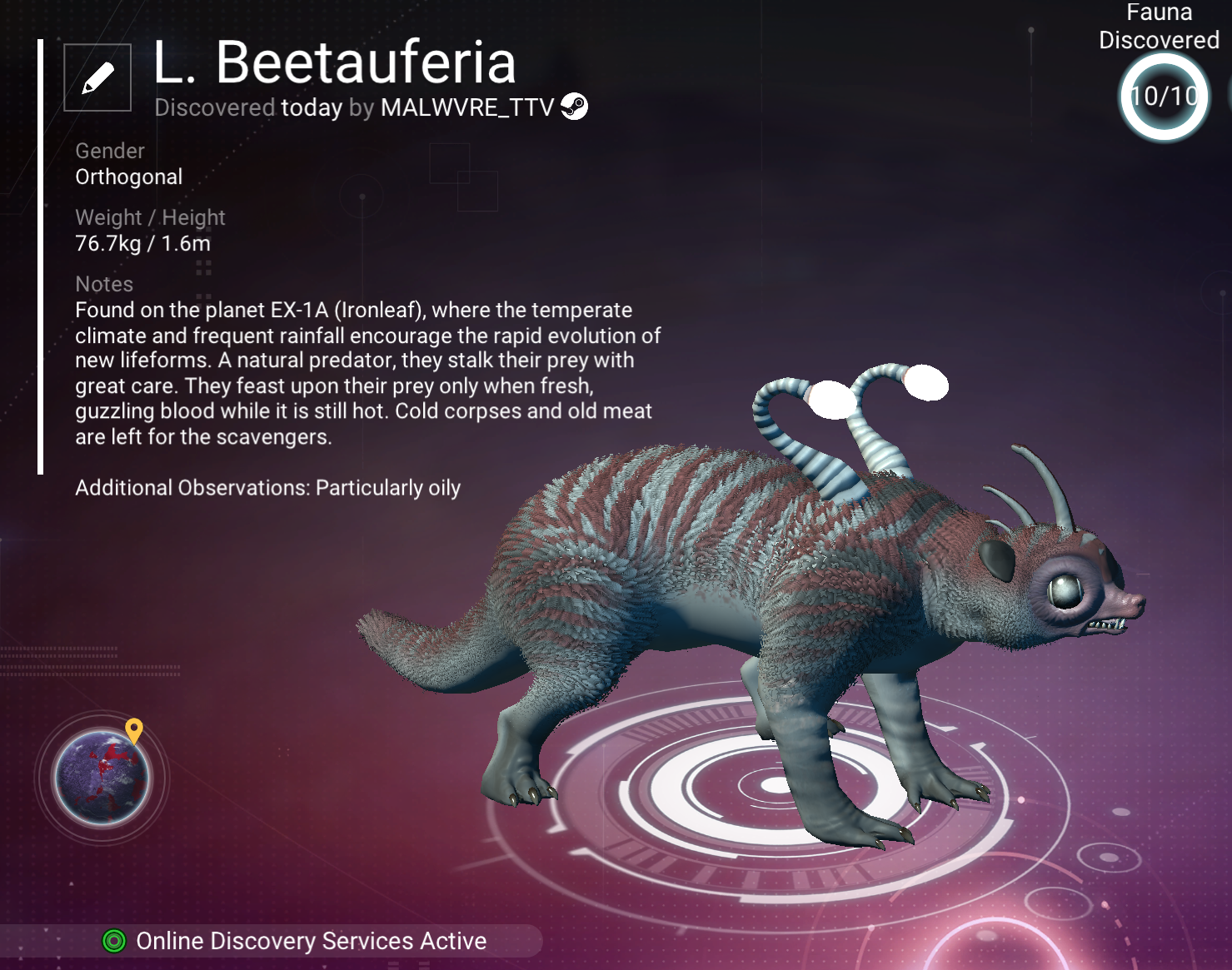
Found on Ironleaf, where the temperate climate and frequent rainfall encourage rapid evolution. The scanner identifies a natural predator that stalks prey carefully and feeds only while the kill remains fresh, consuming blood while it is still warm. Additional scanner observation: particularly oily.
Morphological Description
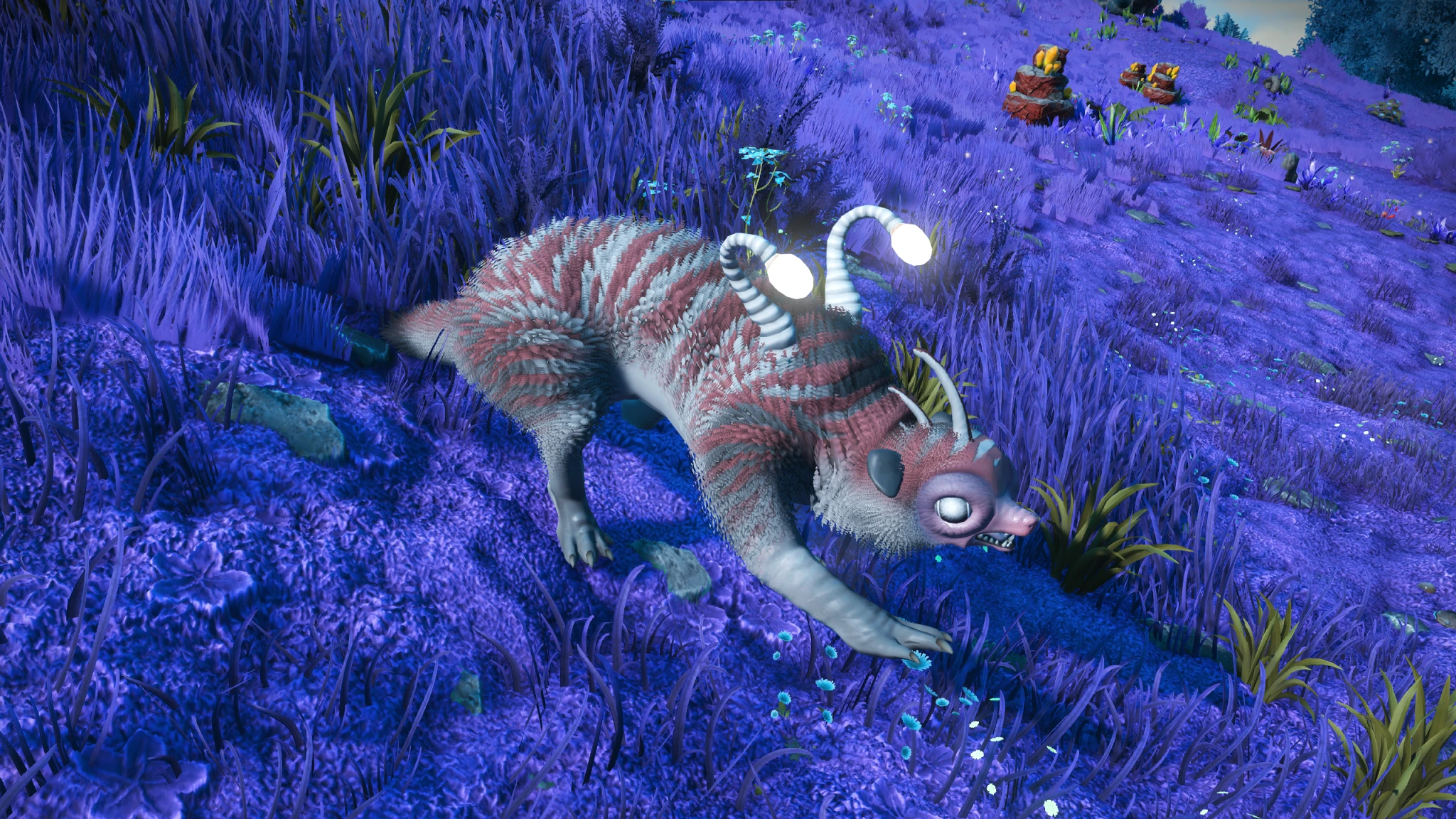
A medium-sized quadruped with a low, muscular body, pale limbs, and a dense coat patterned in alternating pink-red and light stripes. The head bears a large pale eye, a short toothed muzzle, paired forward cranial spines, and two elevated striped appendages ending in bright luminous bulbs.
Behavioral Observation
The animal was documented moving low through dense vegetation with its body held close to the ground. The preserved field record does not include a hunting, feeding, reproductive, or social interaction. Predatory stalking and fresh-kill feeding are retained as scanner-reported behavior.
Ecological Context
The scanner classifies Striped Lantern as a terrestrial predator adapted to Ironleaf's temperate environment. Its low body posture and documented movement through dense ground vegetation are consistent with concealed terrestrial travel, but no prey selection or hunting sequence was directly observed.
The function of the luminous dorsal appendages remains unresolved. Their visibility in the field supports the common name without establishing whether they serve sensory, communicative, defensive, or predatory purposes.
Outstanding Zoological Questions
- Function of the luminous dorsal appendages.
- Primary prey species within Ironleaf's temperate regions.
- Whether the striped coat provides concealment within native vegetation.
- Biological significance of the scanner note “Particularly oily.”
- Reproductive and social behavior.
Archive Significance
Striped Lantern completes Ironleaf's authenticated ten-species fauna survey. The record preserves both the explorer-assigned common name and scanner designation L. Beetauferia while providing the final evidence required to close the planet's initial zoological inventory.
Preservation Justification
Retained as the final authenticated fauna discovery required to complete Ironleaf's orbital biosignature inventory. Preservation supports future comparison of terrestrial predator morphology, scanner-recorded feeding behavior, and luminous anatomical structures across later survey regions.