Botanical Survey Record
Scanner-Preserved Data
Morphological Description
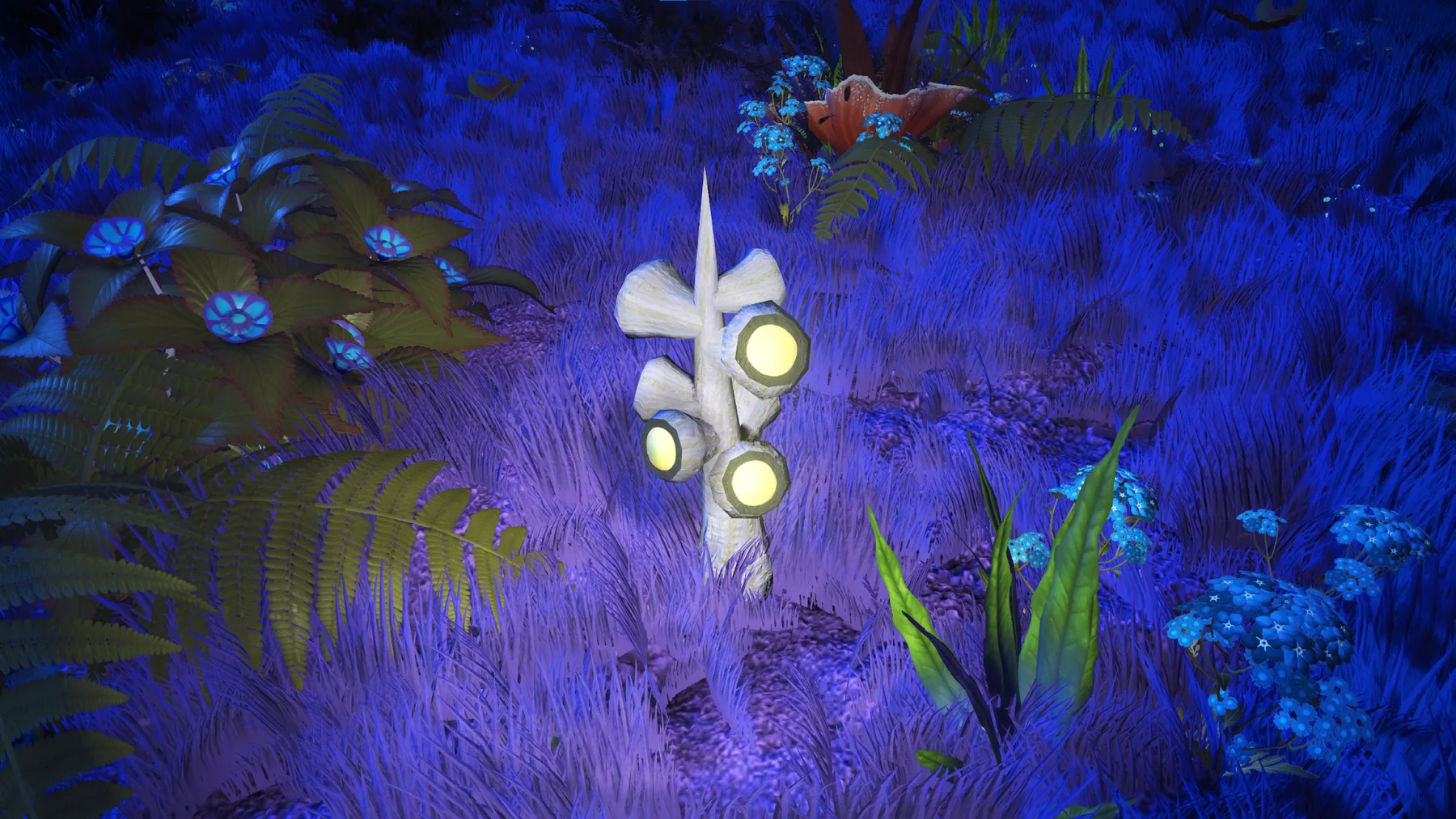
An ivory central stalk supports several luminous trumpet-like chambers. The chambers open outward from the upper portion of the organism and are visibly distinct from nearby vegetation.
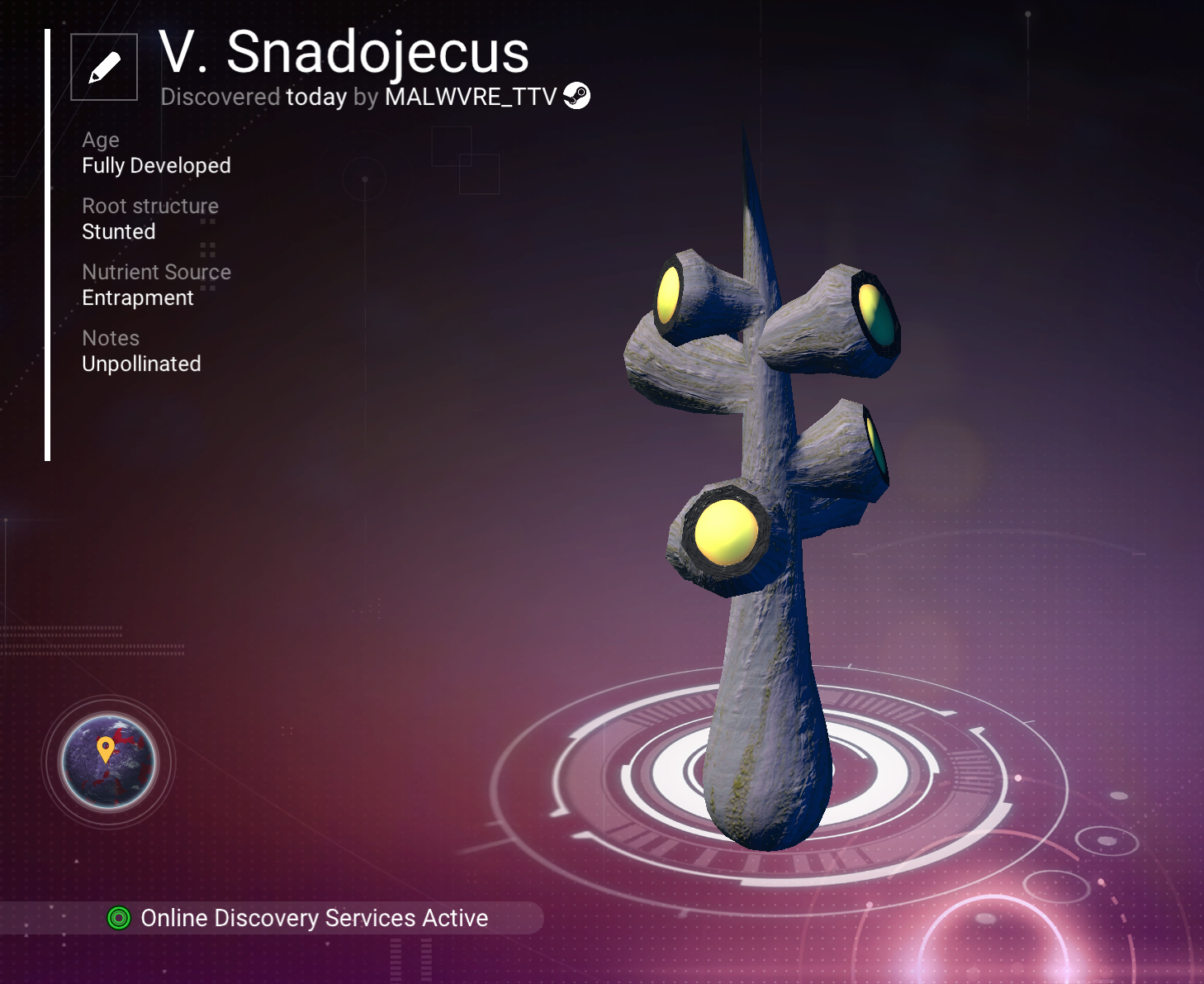
The scanner note “Unpollinated” is preserved exactly as recorded. The noted property was not independently tested during this field survey.
Ecological Context
The scanner records stunted roots and Entrapment as the nutrient source. The luminous trumpet-like chambers are visible, but no capture event or nutrient transfer was observed during the survey.
The preserved evidence supports cataloguing this organism as a distinct botanical record. Broader ecological relationships remain subject to future observation.
Outstanding Botanical Questions
- Mechanism used by the trumpet-like chambers for the scanner-reported Entrapment strategy.
- Reason the scanner classifies the specimen as unpollinated.
- Relationship to the arboreal morphotype sharing the same scanner designation.
- Distribution beyond Survey Site Alpha.
Archive Significance
V. Snadojecus (Type A — Entrapment Form) establishes one authenticated fully developed botanical record with a stunted root classification and Entrapment nutrient strategy within Serene Basin. Its field imagery and preserved scanner data provide a baseline for comparison with later Ironleaf botanical records.
Preservation Justification
Retained as a scanner-verified botanical record from Survey Site Alpha. Preservation supports future comparison of visible morphology, scanner-reported nutrient strategies, root classifications, morphotypes, and regional distribution across Ironleaf.